
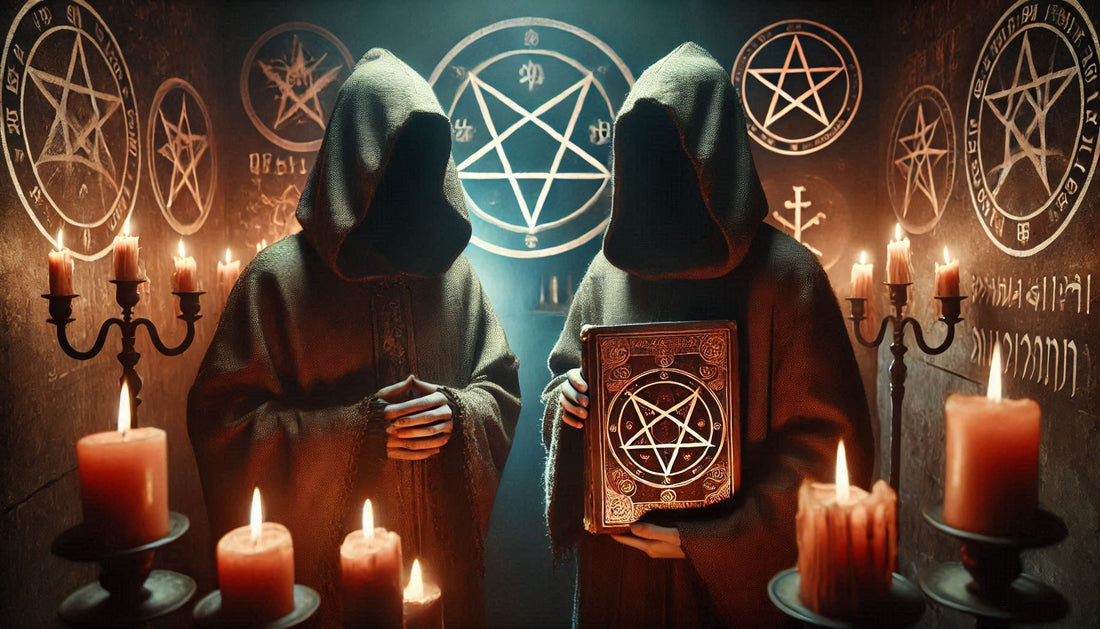
Difference between Satanism and Luciferianism
Can we really make the distinction between Satan and Lucifer? These two terms are often confused, but they have different meanings. In this article, we will explore the comparison between Lucifer and Satan. This will help us better understand these fascinating figures and their implications in Satanism and Luciferism.
Main points to remember
- The term "Lucifer" in Christianity initially referred to Jesus Christ and not Satan.
- The modern view of Lucifer as the Devil stems from the Luciferian heresy of Cagliari.
- Satanism and Luciferism have different philosophical and historical foundations.
- Modern Satanism, popularized by Anton LaVey, redefined satanic symbols and practices.
- Satanic and Luciferian beliefs often involve occult practices and particular rituals.
Historical origins of Satanism and Luciferism
Exploring the historical origins of Satanism and Luciferism helps us understand these cults. They have unique roots and evolution. These differences have shaped their identities.
The beginnings of Satanism
Thehistory of Satanism begins with transgression and rebellion. In the 19th century, modern Satanism appeared. Aleister Crowley, born in 1875, is a famous example.
Crowley, nicknamed "the wickedest man in the world", founded the Abbey of Thelema. But he was expelled by the Italian authorities for sexual scandals.
Satanic sects have experienced conflicts and schisms. They defend combative values, often influenced by Nietzsche. Today, Satanism is rare but resurfaces with modern values.
The roots of Luciferism
The origins of Luciferism are linked to literary and mystical figures. Lucifer is often associated with light and knowledge. In alchemy, he symbolizes transformation.
Lucifer comes from the Sumerians, about 3000 BC. In Rudolf Steiner's anthroposophy, he represents wisdom and consciousness. Luciferism stands out for its cosmic approach, unlike earthly Satanism.
Fundamental philosophical principles
When we look at the philosophical foundations of Satanic philosophy and Luciferian beliefs, we see important differences. These differences come from their view of freedom, morality, and identity.
The Satanic philosophy was created by Anton LaVey in the 1960s. It emphasizes individualism and self-discipline. Adherents see Satan as a symbol of freedom and defiance of dogmas.
Manichaeism, which appeared in the 3rd century, sees the world as a struggle between Good and Evil. Luciferians therefore see light and darkness as important forces.
The discussion onSatanism vs. Luciferism ethics is essential. Satanists emphasize subjective morality and personal satisfaction. Luciferians seek to grow spiritually through knowledge and wisdom.
In summary, understanding the differences between Satanism and Luciferism requires diving into their doctrines. Each offers a unique view on the role of the individual in the universe. This is enriching for those who want to explore freedom, morality, and identity.
Distinct practices and rituals
Satanic rituals and Luciferian ones have unique goals and methods. They aim to obtain spiritual and intellectual power. Let's explore these fascinating practices.
Satanic rituals
Satanic rituals glorify Satan as a symbol of rebellion and freedom. They include occult ceremonies and symbolic rituals. The number 666, linked to "the beast" of the Apocalypse, is often present.
Satanic rituals date from the modern era. They are influenced by occult traditions from the 17th and 19th century. Groups like the Manson Family made these practices known, often in a controversial and violent way.
- Reverse baptism rite
- Invocation of Satan
- Symbolic sacrifices
- Use of the number 666
Luciferian rituals
Luciferian practices aim to elevate the spirit and intellect. They see Lucifer as a guide to the light. The ceremonies include high magic rituals, using sex and blood.
Luciferian beliefs are different from traditional views. They rely on Egyptian prophecies, considering Lucifer as a civilizing god. Adherents seek to connect the earthly world to universal energies.
- High magic rituals
- Rituals involving sex and blood
- Sacred meditations and breathing
- Philosophy of spiritual elevation
Satanic rituals and Luciferian ones are often misunderstood. But they have their own places in the world of occult ceremonies. These practices continue to develop, enriching the mysterious tradition.
Perceptions of Satan and Lucifer
In religious traditions, Satan and Lucifer have varied meanings. They represent rebellion, light, and temptation. These two figures are often seen as complementary in Satanism and Luciferism.
Lucifer means "light bearer". He was a very powerful angel created by God. But, after his rebellion, his name took on a negative connotation. A large part of the angels followed him, showing the impact of his ideas.
Satan, on the other hand, is often seen as the tempter. He is the prince of lies. In biblical texts, he is called the Serpent, the Evil One, and the Prince of Darkness. This shows his complexity and multiple cultural facets.
The transformation of Lucifer into Satan shows a change in religious perceptions. This figure symbolizes the fall of rebellions and the struggle between light and darkness. By exploring these themes, we better understand the importance of Lucifer and Satan in theological and philosophical reflection.
The symbolism around Satan and Lucifer gave birth to various beliefs. Adherents interpret these figures personally. They are influenced by biblical narratives like the battle between Archangel Michael and Satan.
The transformation of Lucifer into a demonic entity shows a metaphor of moral choices. This duality continues to fascinate those who study Satanism and its impact on our culture.
In conclusion, Satan and Lucifer, with their varied symbolism, enrich our understanding. They show us dynamics of power, rebellion, and morality at the heart of religious traditions.
Difference between Satanism and Luciferism
Satanism and Luciferism are often confused. But, they have important distinctions between Satanism and Luciferism . Let's see the main aspects of these two beliefs.
Classic Satanism sees Satan as a god. It comes from the sacred texts of the Bible and the cult of Samael. Luciferism, on the other hand, has no strict dogmas. It leaves freedom to its adherents, around Lucifer.
A major difference is that traditional Satanism does not directly mix Lucifer and Satan. Luciferism, on the other hand, sees the two as a single entity. Some Luciferians practice extreme rituals, like the use of human bones.
LaVeyan Satanism , founded by Anton LaVey in 1966, emphasizes the distancing from God. It sees the eternal life of the soul or its death as essential. Satanism is divided into several paths, like the Left-Hand Path and the Middle Path.
Satanism is based on structured rituals. Luciferism, influenced by authors like John Milton, encourages a free interpretation of Lucifer. Even if they share a rejection of Christian theology, they remain distinct in their beliefs and practices.
Cultural and literary representations
For centuries, Lucifer and Satan have inspired many works. They have marked our collective imagination. Let's see these representations through two major prisms.
Influence in Romantic literature
Romantic writers of the 19th century saw Lucifer differently. They saw him as a tragic and Promethean figure. In Paradise Lost by John Milton, Lucifer is a rebel and a symbol of freedom and knowledge.
This vision made Lucifer more complex. It introduced a dualistic view of good and evil.
- Paradise Lost - John Milton
- Les Fleurs du mal - Charles Baudelaire
- Faust - Johann Wolfgang von Goethe
Modern pop culture
Today, Satan is everywhere in the media. He appears in movies, television series, music, and video games. Lucifer has become an anti-hero in series like Lucifer.
This shows the influence of Luciferism in culture. Heavy metal music is an example. It has gained recognition, with dedicated media and shows.
- Greater visibility of heavy metal in mainstream media.
- Bands like Black Sabbath and Iron Maiden celebrated as icons of the genre.
- Metal song covers by mainstream artists.
Despite this, stereotypes and negative perceptions persist. But extreme behaviors among metal fans are marginal. The image of Lucifer continues to fascinate and divide.
Controversies and common myths
Satanism and Luciferism are often misunderstood. A common false belief is that some use extreme rituals. In reality, these practices are rare in these diverse communities. Most Luciferians reject these methods and distinguish themselves from Satanists.
Luciferism is both a religion and a philosophy. It is considered a way of life by some, including occult practices.
Negative stereotypes have been created by historical figures and events. The Affair of the Poisons in France, for example, reinforced these negative ideas. This affair involved members of the nobility and clergy, with severe penalties.
Luciferian controversies show the diversity of beliefs. Luciferian Wicca is very different from traditional Luciferism. Some see Lucifer as a mentor or a symbol of rebellion.
It is essential to demystify these myths to better understand these beliefs. Jewelry with the sigil of Lucifer often symbolizes the quest for knowledge and freedom. This helps us overcome stereotypes and see these philosophies in a more nuanced light.