Incubi and Succubi: the lovers of the shadows in the esoteric tradition
Few figures from the occult imagination fascinate as much as incubi and succubi. Half-dreamed, half-experienced, these entities have traversed the centuries, slipping from medieval grimoires to modern confessions of witches and initiates. But who are they really? And what do they symbolize for today's esotericists?
1. A medieval genesis between demonology and fantasy
The term incubus comes from the Latin incubare, "to lie upon," and designates a male spirit supposed to abuse a woman during her sleep. Conversely, the succubus — from the Latin succubare, "to lie beneath" — is a female entity visiting men at night, seducing them in a dream, but often perceived as corrupting.
In the medieval Christian tradition, these sexual demons were used to justify both nocturnal emissions and preferred desires as impure. Thomas Aquinas even claimed that the same demon could take on both roles: succubus with men, incubus with women, in order to collect the seed and transmit it. The fear of incubi and succubi thus becomes a matter of morality rather than theology.
2. Modern esotericism facing erotic entities
But if we move away from the punitive Christian view, a more refined esoteric reading emerges. In many initiatory traditions, the so-called "erotic" entities are not necessarily demonic. They rather represent archetypal forces, energetic manifestations originating from the unconscious, or even thought-forms nourished by desire, loneliness, or a lack of grounding.
The mage Eliphas Levi already spoke of astral entities capable of forming themselves from human passions. The incubus or succubus thus becomes the reflection of our own projections, a mirror of the shadow, which only an enlightened consciousness can integrate without losing itself.
3. Magical ethics: pact or parasitism?
The central question for any contemporary practitioner is that of ethics. Working with an erotic entity, whether in a magical or psychic sense, requires a high degree of mastery. For if one opens certain doors in the astral, one must know how to close them.
In certain currents of sexual magic, these entities are deliberately involved, sometimes even nourished by offerings or ritualized practices. In other traditions, such as black tantra or chaos magic, relationships with these entities are explored to draw power or knowledge. But always with caution: what is called is not always what answers.
It is essential to distinguish between invocation, egregore, free entity, and parasitism. Too often, a simple sleep disorder or nocturnal psychic overactivity is interpreted as a visit. However, a poorly framed initiation can pave the way for insidious energy vampirism, where the operator becomes a slave to what they believe they dominate.
4. Incubus and succubus as alchemical figures
One can also read incubi and succubi through the alchemical prism: as the meeting of the masculine and feminine principles in the nigredo. The union with the other — sometimes terrifying, sometimes ecstatic — is nothing other than a call to transform the raw matter of the psyche into consciousness.
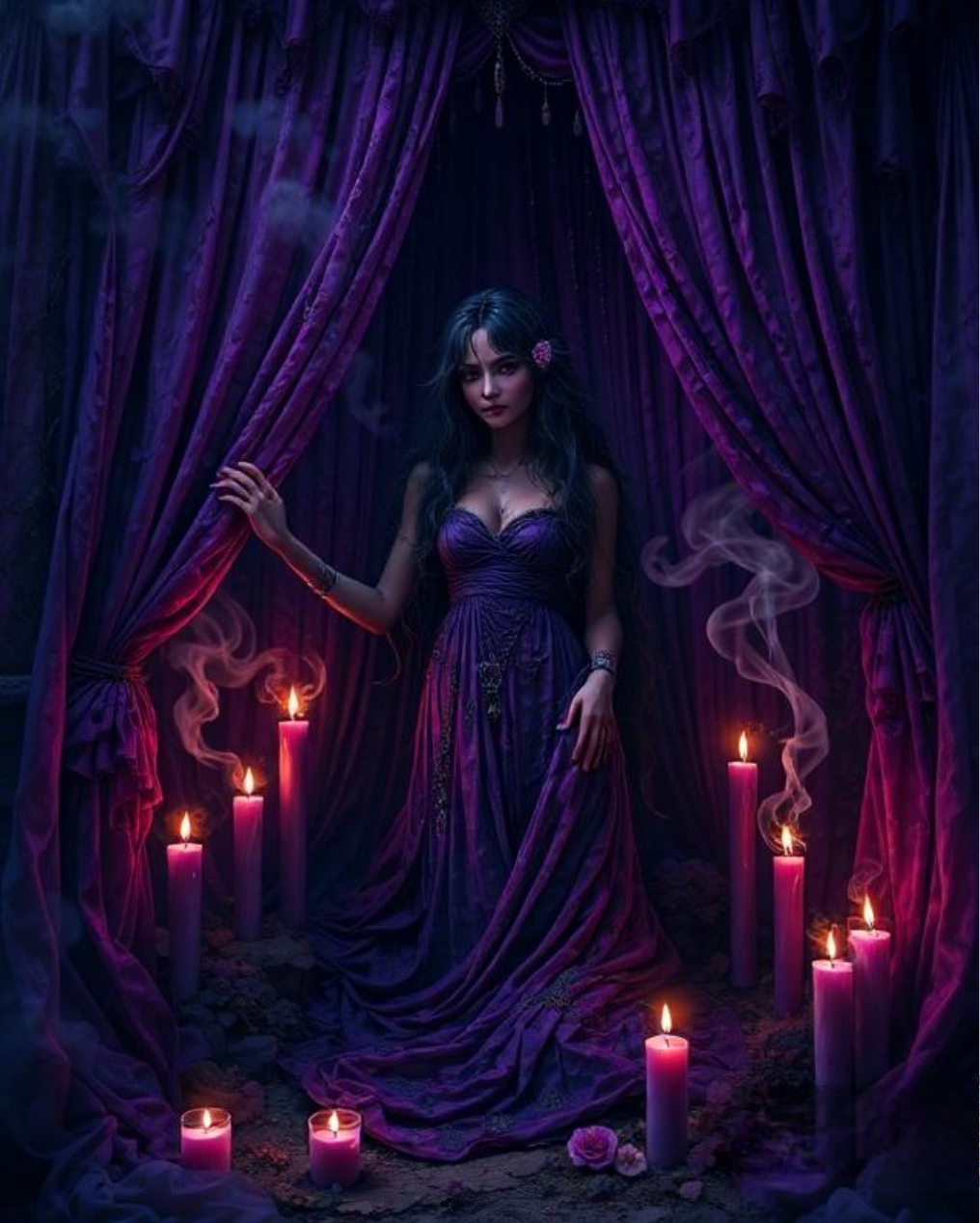
The succubus thus becomes Lilith: no longer a demon, but a sovereign of the shadow, capable of initiating. The incubus becomes the Hidden Lover: the secret fire that awakens the kundalini.
5. Conclusion: the spectral lover as an initiatory ordeal
Ultimately, incubi and succubi are neither good nor evil. They are revealers. And he who approaches them must be ready to encounter his own impulses, his loneliness, his wounds, and his buried desires. They are not lovers of the flesh, but subtle reflections. Working with them means walking on a tightrope between ecstasy and loss of self.
The magical elite does not fear the darkness, it traverses it. Provided that it is not darker than it.