
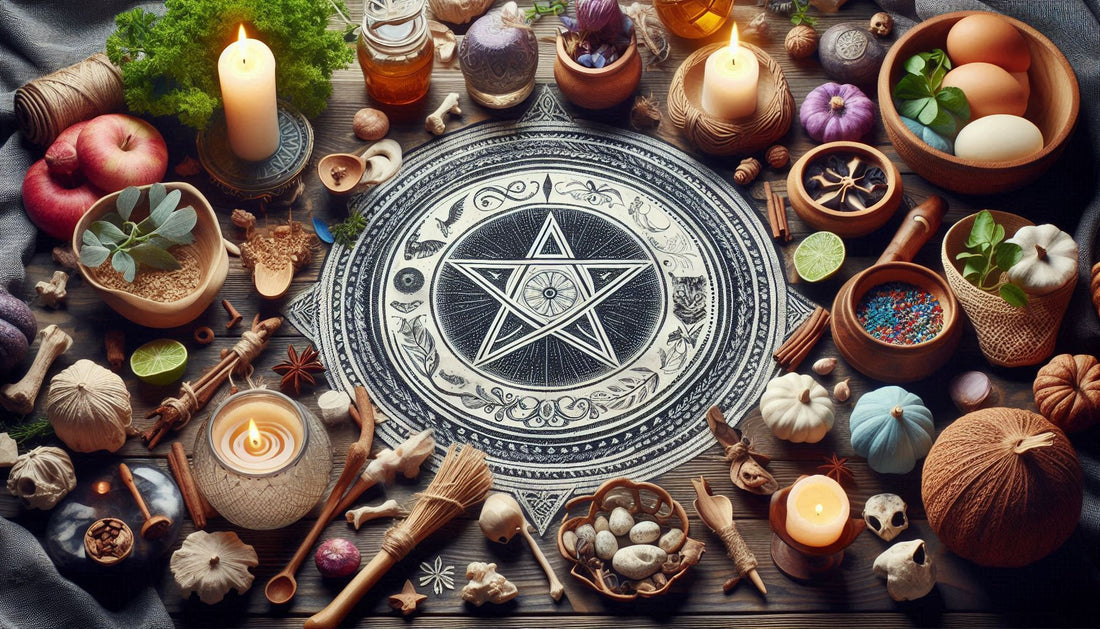
What is Wicca? Tradition and Beliefs
Why do you wonder why Wicca attracts so many people? This pagan religion offers a unique spirituality. It focuses on nature, dualistic deities, and magic.
Wicca, or Wiccanism, was born in the mid-20th century. Gerald Gardner is its father. It draws inspiration from ancient mythologies and shamanic rituals. It celebrates nature and worships a Mother Goddess and a Horned God.
Wicca has become very popular, especially in the United States and Europe. It is known for its ethical principles, such as the Rede. This rule says: “Do what you will, so long as it harms no one.” Wiccan rituals are seen as prayers.
Summary of Key Points
- Wicca is a growing neo-pagan religion.
- Gerald Gardner, a Briton, is considered the founder of modern Wicca.
- Wiccan beliefs include the worship of a Mother Goddess and a Horned God, as well as a strong connection with nature.
- Ethical principles such as the Rede and the Law of the Triple Return are at the heart of Wiccan spirituality.
- Wicca is recognized in several countries, including the United States and Great Britain, and continues to attract new followers from all backgrounds.
Origins of Wicca
Wicca has its roots in early 20th-century European neopaganism. It blends ancient and modern traditions. This creates a unique path for today's spirituality.
The Precursors of Wicca
Wicca draws inspiration from pagan traditions. Druidism, shamanism, and Greek, Roman, Norse, and Celtic mythologies have greatly influenced it. These cultures laid the foundations of Wicca.
The Role of Gerald Gardner
Gerald Gardner, nicknamed the father of modern Wicca, played a crucial role. He formalized and popularized Wicca in the 1950s. His book "Witchcraft Today" in 1954 gave structure to this movement.
Cultural and Religious Influences
Wicca is influenced by folklore and ceremonial magic. Feminism, especially in the United States, played an important role in the 1970s. Nature-related ceremonies reflect the syncretism of Wicca.
Wicca is still developing, especially in English-speaking countries. It offers an inclusive spirituality for those who want to reconnect with the old while remaining modern.
Religious Principles of Wicca
Wicca believes in nature and its cycles. It is based on pantheism, which sees the universe as a divine entity. Wicca also worships a goddess and a god, symbolizing feminine and masculine forces.
Pantheism and Bithéism
Wicca accepts many deities from different cultures. It sees every element of nature as sacred and connected. It honors the Goddess and the Horned God through various rituals.
The Sabbats of the Wheel of the Year
Wiccan sabbats are important times of the year. They follow the seasons and the cycles of nature. These eight celebrations honor nature and its changes.
Magic and the Subtle Planes
Magic is essential in Wicca. It allows interaction with natural forces. It uses rituals, visualization, and natural elements to channel energy.
Philosophical and Spiritual Principles
Wicca is based on harmony with nature and the celebration of life. These principles seek a constant connection with the universe. They respect all forms of life.
The Wiccan Creed
The Wiccan creed says: “As long as no one is harmed, do what you will.” It is a simple but powerful ethic. It encourages freedom while reminding us of our responsibility toward others and nature.
Embracing this ideal pushes us to reflect on our actions. It invites us to live in accordance with Wiccan ethics.
The Law of the Triple Return
The Law of the Triple Return is a key principle. It says that our actions, good or bad, return three times. This concept highlights the importance of responsibility.
By applying this idea to our daily lives, we follow a Wiccan philosophy that values positive action. This helps us live in harmony with the universe.
These beliefs have shaped Wiccan philosophy. They inspire a lifestyle centered on harmony and respect. By following these principles, we align ourselves with our ethics and with a global community sharing the same values.
The Traditions of Wicca
Wicca is very diverse, with several unique traditions. They range from Wiccan hermeticism to Celtic rituals. Each spiritual path allows for a different connection to nature and the divine.
Historical, Hierarchical, and Hermetic Traditions
Historical and hierarchical traditions come from Wiccan hermeticism. They have a well-defined structure and rituals. The Gardnerian tradition, for example, follows strict rules.
These traditions value discipline and respect for hierarchy within covens.
Celtic and Faerie Traditions
Celtic rituals are another important part of Wicca. They draw on Gaelic myths. Celtic Wiccans celebrate natural cycles and seasonal festivals.
These traditions add a faerie touch. They allow one to feel connected to ancestors and sacred landscapes.
Eclectic Traditions
Eclectic magic is a modern trend in Wicca. It allows one to choose and personalize spiritual and ritual elements. This approach is flexible and encourages personal adaptation.
It is highly appreciated for its creative freedom while remaining true to the spirit of Wicca.
Wiccan Beliefs and Practices
Wiccans have a rich tradition of beliefs and practices. They are based on divine dualism, rituals, and reincarnation. These fundamental elements help practitioners connect with nature.
Divine Dualism: Goddess and Horned God
The heart of the Wiccan religion is divine dualism. The Goddess represents the earth and fertility. The Horned God symbolizes wild nature and masculine forces.
This duality allows practitioners to find complementary energies. They thus connect more intensely with natural rhythms. The Wiccan deities encompass all aspects of human and natural existence.
Rituals and Ceremonies
Wiccan rituals are moments of spiritual communion. They are celebrated during Sabbats and Esbats. These rituals include ceremonies such as Handfasting and Handparting.
Wiccans also participate in rites of passage. For example, Wiccaning for newborns and Crossing-Requiem at death. These celebrations reflect the completion of a life cycle.
Reincarnation and Summerland
Wiccans believe in reincarnation. They see the soul as constantly evolving. Each life is a chance for spiritual perfection.
Between reincarnations, the soul rests in Summerland. This place is perceived as a place of peace. It gives the soul time to prepare for its next earthly journey.